The power grid, for all its marvels, is increasingly vulnerable. From severe weather events like hurricanes and ice storms to heatwaves straining infrastructure, power outages are no longer rare inconveniences; they're a growing reality for millions of homeowners. When the lights go out, your home can quickly transform from a comfortable sanctuary into a cold, dark, and potentially costly predicament. Spoiled food, a lack of heating or cooling, lost work, and an overall sense of helplessness can quickly mount. That’s why choosing the right generator for your home isn't just about preparing for an emergency—it's about investing in peace of mind, protecting your assets, and maintaining your quality of life.
But with so many options, how do you even begin? This comprehensive guide will cut through the noise, helping you understand your choices and confidently select the perfect backup power solution for your unique needs.
At a Glance: Your Generator Selection Checklist
- Assess Your Needs First: List exactly what you need to power during an outage (refrigerator, AC, well pump, etc.).
- Know Your Watts: Calculate both running and starting watts for your essential appliances to avoid underpowering.
- Portable vs. Standby: Decide between manual, mobile power (portable) or automatic, whole-home coverage (standby).
- Fuel Up Wisely: Consider fuel availability, storage, and efficiency for gasoline, propane, natural gas, or diesel options.
- Budget Beyond Purchase Price: Factor in installation costs, fuel, and maintenance for a true cost picture.
- Safety is Paramount: Always install and operate generators safely, following manufacturer guidelines and local codes.
- Consult a Pro: A licensed electrician is crucial for safe installation, especially for transfer switches and standby units.
Why a Generator? More Than Just Convenience
Imagine this: a late-night storm knocks out power. Without a generator, you're fumbling for flashlights, worrying about the food in your fridge, and facing a potential cold night. If you rely on a well, no power means no water. If you work from home, productivity grinds to a halt. The costs add up quickly, not just in discomfort but in actual dollars lost from spoiled groceries or missed deadlines. A reliable backup generator transforms this scenario, providing:
- Food Preservation: Keeping your refrigerator and freezer running saves hundreds of dollars in spoiled food.
- Temperature Control: Maintaining heating or air conditioning ensures comfort and prevents health risks, especially for vulnerable family members.
- Essential Utilities: Powering well pumps, sump pumps, and water heaters keeps your home functional and prevents basement flooding.
- Connectivity & Productivity: Keep your internet, computers, and charging stations operational.
- Safety & Security: Lights deter intruders and allow for safe movement within your home.
It's clear: a generator is a proactive investment in your home's resilience and your family's well-being.
Portable Powerhouse vs. Whole-Home Guardian: Your Two Main Options
When you start looking at generators, you'll quickly discover two primary categories: portable generators and standby (or whole-home) generators. Each serves a distinct purpose and comes with its own set of capabilities and considerations.
Portable Generators: On-Demand Power for Select Needs
Think of a portable generator as your rugged, versatile companion for smaller, more immediate power needs. These units are designed for mobility, allowing you to bring power directly to where it's needed, whether it's powering a few essential appliances at home or running tools at a job site.
What They Are:
Portable generators are compact, wheeled units that convert mechanical energy (from burning fuel) into electrical energy. They typically run on gasoline or propane, though dual-fuel models that switch between both are increasingly popular. You'll usually start them manually with a pull cord or an electric push-button. Power is then delivered via standard extension cords connected directly to the generator's outlets.
Key Characteristics:
- Fuel Source: Most commonly gasoline, but many models offer propane or a dual-fuel option.
- Wattage Output: For home use, these range from a few thousand watts (e.g., 2,000-7,500 watts) up to 10,000+ watts, capable of running multiple critical appliances. Basic models under 200 watts are also available, mainly for camping or very light use. A 4500-watt dual-fuel model might cost around $1000, offering a good balance of power and affordability.
- Operation: Manual start, manual fuel connection, and manual appliance plugging (or via a manual transfer switch).
- Portability: Designed with wheels and handles for easy movement.
- Cost: Generally more affordable, ranging from $500 to $5000+ for robust home models.
Pros of Portable Generators: - Affordability: Lower initial purchase cost.
- Flexibility: Can be used for more than just home outages (camping, tailgating, DIY projects).
- No Permanent Installation: Simple setup for temporary use.
- DIY-Friendly: Easier to operate and maintain for basic users.
Cons of Portable Generators: - Manual Operation: Requires you to be home to start it, connect cords, and refuel.
- Limited Capacity: Typically won't power an entire house simultaneously, especially energy-intensive appliances like central AC.
- Fuel Storage: Requires storing gasoline (which degrades) or propane tanks.
- Safety Risks: Carbon monoxide poisoning is a serious concern if not operated far away from the house. Direct cord connections can overload circuits. Backfeeding into the grid is extremely dangerous and illegal.
- Noise: Can be quite loud.
The Transfer Switch Advantage:
While you can run extension cords, for safer and more convenient home use, a licensed electrician can install a manual transfer switch subpanel. This subpanel connects directly to your home's electrical system, allowing you to safely switch between utility power and generator power. This eliminates the need for numerous extension cords and prevents dangerous backfeeding. It also makes for a much more organized and secure power management system during an outage.
Standby Generators: Seamless, Automatic Home Protection
If you're looking for the ultimate in convenience, reliability, and whole-home power, a standby generator is your answer. These systems are permanently installed and designed to seamlessly take over when the grid fails, often without you even realizing the power went out.
What They Are:
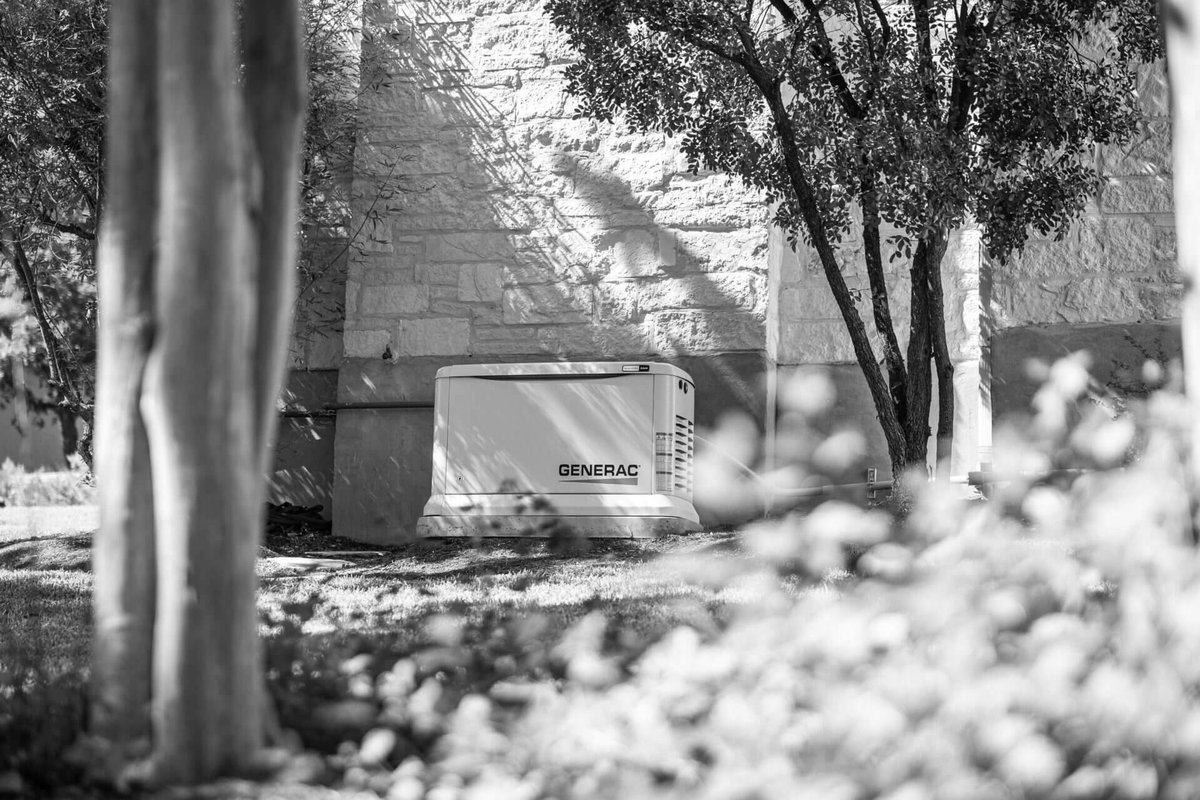
Standby generators are large, stationary units, similar in appearance to an outdoor air conditioning unit, typically installed on a concrete pad outside your home. They are permanently wired into your home's electrical system via an automatic transfer switch. They're fueled by your home's natural gas line or a dedicated underground propane tank. When utility power is interrupted, the automatic transfer switch immediately senses the outage, signals the generator to start, and within seconds, transfers your home's power supply from the utility to the generator. When utility power returns, the system reverses the process, shutting down the generator.
Key Characteristics:
- Fuel Source: Connected to your home's natural gas line (most common) or a large, dedicated propane tank (underground or above-ground). This eliminates the need for manual refueling.
- Wattage Output: Much higher capacity, typically ranging from 7,500 watts to 48,000 watts or more. These units are designed to power entire homes, including large appliances like central air conditioning, kitchen appliances, and multiple sump pumps, simultaneously.
- Operation: Fully automatic. Detects outages, starts, transfers power, and shuts down on its own.
- Installation: Requires professional installation by a licensed electrician and sometimes a plumber (for gas lines) and local permits.
- Cost: A significant investment, ranging from $5,000 to over $25,000, not including installation.
Pros of Standby Generators: - Automatic Operation: Hands-free, instant power during an outage. Ideal for busy households or when you're away from home.
- Whole-Home Power: Can power virtually everything in your house, ensuring maximum comfort and functionality.
- Permanent Fuel Supply: No need to store or refill portable fuel cans/tanks.
- Increased Home Value: A desirable feature that can boost property value.
- Quieter Operation: Generally much quieter than portable generators.
- Enhanced Safety: Professionally installed, with no messy extension cords or risk of backfeeding.
Cons of Standby Generators: - High Upfront Cost: Significantly more expensive than portable units, both for purchase and installation.
- Professional Installation Required: Not a DIY project, adding to the overall cost.
- Permanent Fixture: Not portable for other uses.
- Regular Maintenance: Requires scheduled maintenance by a professional to ensure readiness.
Demystifying Power Needs: How to Size Your Generator
Choosing the right generator size is the most critical step. Too small, and you won't power your essentials. Too large, and you're overspending and wasting fuel. It’s not just about "how big is my house" but "what exactly do I need to run?" This process involves a bit of simple math and a clear understanding of your priorities.
Step 1: Map Out Your Must-Haves
Before you look at a single generator specification, grab a pen and paper. Walk through your home and list every appliance, light, and device you absolutely cannot live without during an extended power outage. Think beyond just the refrigerator. Do you have a well pump? A sump pump? Do you rely on a CPAP machine? What about your router for internet access, or a few key lights?
Common "Must-Haves":
- Refrigerator
- Freezer (if separate)
- Sump pump or well pump
- Furnace fan (for heat) or a window air conditioner (for cooling)
- Lights (a few key rooms)
- Microwave
- Television
- Laptop/computer
- Phone chargers
- Garage door opener
- Medical equipment (oxygen concentrator, CPAP, etc.)
Step 2: Calculate Running Watts
Every electrical appliance has a "running wattage"—the power it continuously draws once it's operating normally. You'll find this information on a label or in the owner's manual. Look for a sticker on the appliance itself, usually on the back or bottom.
- If wattage is listed: Great! Jot that number down.
- If only amps are listed: No problem. Multiply the amps by 120 volts (the standard household voltage in the U.S.).
- Formula: Amps x 120 Volts = Watts
- Example: A refrigerator drawing 5 amps would be 5 A x 120 V = 600 Watts.
Add up the running watts for all the appliances on your "must-have" list. This gives you your total running watts.
Step 3: Factor in Starting Watts (The Motor Surge)
Here's where many people miscalculate. Appliances with electric motors—like refrigerators, freezers, air conditioners, well pumps, and sump pumps—require a brief surge of power to start up. This initial surge, called "starting watts" or "surge watts," can be 2-3 times higher than their running watts. Once they're running, they drop back to their lower running wattage.
Your generator needs to be powerful enough to handle these brief surges. To simplify this for calculation, you can use a common multiplier:
- Multiply your total running watts (from Step 2) by 1.5. This will give you a good estimate of the minimum generator capacity needed to handle the cumulative starting surges.
- Formula: Total Running Watts x 1.5 = Estimated Minimum Generator Size
- Example: If your total running watts are 3,000 W, then 3,000 W x 1.5 = 4,500 W. You'd need a generator that can provide at least 4,500 starting watts.
Important Note: If you have multiple motor-driven appliances, they likely won't all start at the exact same moment. However, it's safer to over-estimate slightly to ensure your generator can handle any combination of simultaneous starts. Some sources recommend multiplying the highest starting wattage appliance by 2-3 and adding that to the running watts of all other appliances. For simplicity and a general estimate, the 1.5x multiplier for total running watts is a good starting point for typical home scenarios.
Step 4: The 75% Rule: Don't Max Out Your Machine
You wouldn't drive your car at redline everywhere, and the same applies to generators. To prolong the life of your generator and ensure optimal performance, it’s best practice to operate it at about 75% or less of its maximum rated capacity.
- Once you've calculated your estimated minimum generator size (from Step 3), choose a generator that has a rated running wattage slightly higher than this number. This gives you a buffer, preventing your generator from continuously running at its maximum limit and potentially extending its lifespan and fuel efficiency.
Handy Wattage Estimates for Common Appliances
Use this table as a general guide. Always check your specific appliance's label for exact figures. (Newer appliances are generally more efficient.)
| Appliance | Estimated Running Watts | Estimated Starting Watts (if motor) |
|---|---|---|
| Refrigerator (newer) | 300 - 800 | 900 - 1800 |
| Refrigerator (older) | 700 - 1200 | 2100 - 3600 |
| Microwave | 800 - 1200 | N/A |
| Television | 50 - 200 | N/A |
| Laptop computer | 50 - 100 | N/A |
| Well Pump (1/2 HP) | 750 - 1500 | 1500 - 3000 |
| Sump Pump (1/3 HP) | 800 - 1000 | 1600 - 2000 |
| Window Air Conditioner | 600 - 1500 | 1800 - 4500 |
| Central Air Conditioner | 2000 - 5000+ | 6000 - 15000+ |
| Electric Furnace/Heater | 1500+ | N/A |
| Portable Fan | 75 - 200 | 150 - 400 |
| Incandescent Light Bulb | 60 - 100 | N/A |
| LED Light Bulb | 5 - 15 | N/A |
| Coffee Maker | 800 - 1500 | N/A |
| Toaster | 800 - 1500 | N/A |
| Hair Dryer | 1200 - 1875 | N/A |
| Note: Central air conditioners and electric furnaces require substantial power, often pushing homeowners towards larger standby generators. |
Beyond the Watts: Key Decision Factors to Consider
Sizing is crucial, but it's just one piece of the puzzle. Your lifestyle, local climate, budget, and long-term priorities will also heavily influence your final choice.
Outage Frequency & Duration: What's Your Risk Profile?
- Rare, Short Outages (Stable Climate/Grid): If you experience infrequent, short-lived power interruptions (e.g., once a year for a few hours), a mid-range portable generator might be perfectly adequate. You just need to keep the fridge cold and a few lights on.
- Frequent, Long Outages (Severe Weather/Aging Grid): If you live in an area prone to severe weather (hurricanes, blizzards, wildfires) or have an unreliable power grid, then the investment in a larger portable or a full standby generator becomes much more compelling. The ability to maintain normalcy for days, even weeks, without intervention is invaluable.
Fuel Type: What Powers Your Peace of Mind?
The fuel a generator uses impacts its running costs, convenience, and how long it can operate.
- Gasoline:
- Pros: Readily available, high energy density (more power per gallon).
- Cons: Degrades over time (requires fuel stabilizers or rotation), flammable (storage can be an issue), can be scarce during widespread outages, exhaust fumes are highly toxic.
- Propane (LPG):
- Pros: Clean-burning, longer shelf life than gasoline, safer to store in tanks. Dual-fuel portable generators often use propane. Standby generators can connect to a large tank.
- Cons: Less energy dense than gasoline (you'll need more of it for the same run time), larger tanks can be bulky for portables, requires a dedicated tank for standby.
- Natural Gas:
- Pros: Unlimited supply (if your home is connected), very clean-burning, no storage needed, lowest running costs. Exclusively for standby generators.
- Cons: Requires a permanent connection to a natural gas line (which might also be interrupted in a major earthquake or event affecting gas infrastructure), professional installation required.
- Diesel:
- Pros: Extremely durable and long-lasting engines, very fuel-efficient.
- Cons: Higher initial cost, diesel fuel can gel in very cold temperatures, exhaust can be smelly. More common for very large industrial generators or RVs, less so for residential.
For most homeowners, natural gas (for standby) or a dual-fuel gasoline/propane portable unit offers the best balance.
Noise Levels: How Quiet Do You Need It To Be?
Generators, especially portables, can be loud. Measured in decibels (dB), a typical portable generator can run between 65 dB to 85 dB (similar to a vacuum cleaner or lawnmower). Standby generators are generally quieter, often in the 55 dB to 65 dB range (similar to normal conversation or an air conditioner).
- Consider: Your neighbors, proximity to bedrooms, and local noise ordinances. If noise is a major concern, look for inverter generators (a type of portable that's much quieter and more fuel-efficient) or invest in a standby unit.
Budget & Installation Costs: The Full Financial Picture
The price tag on the generator itself is just one part of the equation.
- Portable Generators:
- Unit Cost: $500 - $5,000+
- Additional Costs: Fuel, extension cords, potentially a manual transfer switch ($500 - $1,500+ for parts and labor).
- Standby Generators:
- Unit Cost: $5,000 - $25,000+
- Installation Costs: This can be significant, ranging from $3,000 to $10,000+ depending on local labor rates, the complexity of your home's electrical system, whether new gas lines or concrete pads are needed, and local permit requirements.
- Additional Costs: Fuel line installation (for natural gas) or propane tank purchase/rental, regular professional maintenance.
Don't let the higher upfront cost of a standby unit deter you immediately. Factor in the long-term convenience, automatic operation, and potential increased home value.
Maintenance & Storage: Keeping Your Machine Ready
- Portable Generators: Require regular fuel rotation (or stabilizer), oil changes, spark plug checks, and careful storage in a dry, well-ventilated area away from living spaces.
- Standby Generators: Need annual professional maintenance to ensure they're ready to run when needed. They often have self-test features that run for a short period weekly or monthly.
Regardless of type, a well-maintained generator is a reliable generator.
Medical Needs: A Non-Negotiable Consideration
If anyone in your household relies on critical medical equipment (e.g., oxygen concentrators, nebulizers, power wheelchairs, CPAP machines), a generator isn't just a convenience—it's a necessity. In these cases, a reliable standby generator with automatic operation offers the highest level of safety and assurance. The ability to automatically restore power without manual intervention can be life-saving.
Safety First: Non-Negotiable Rules
Operating a generator carries serious risks if not done correctly.
- Carbon Monoxide Poisoning: Generators produce carbon monoxide (CO), an odorless, colorless, deadly gas. NEVER operate a generator indoors, in a garage, or near windows/vents. Always place it outdoors, at least 20 feet away from your home, with the exhaust pointed away. Install CO detectors in your home.
- Electrical Hazards:
- Backfeeding is Illegal and Lethal: Never plug a generator directly into a wall outlet. This "backfeeds" electricity into the utility grid, potentially electrocuting utility workers.
- Proper Hookup: For connecting a generator to your home's electrical system, you absolutely need a transfer switch installed by a licensed electrician. This ensures safe power transfer and prevents backfeeding. Learn more about safe generator hookup.
- Grounding: Always follow the manufacturer's instructions for grounding your portable generator.
- Fuel Safety: Store fuel in approved containers in a well-ventilated area, away from ignition sources. Never refuel a hot or running generator.
Making the Call: Portable or Standby?
Now that you understand the details, let's look at typical scenarios to help solidify your decision.
You're a Portable Generator Candidate if:
- Your budget is tighter.
- Outages are rare and usually short (a few hours to a day).
- You only need to power a handful of essential items (refrigerator, a few lights, phone charging, maybe a microwave or a small window AC).
- You don't mind manual setup and refueling.
- You need portability for other uses (camping, DIY projects).
- You have safe outdoor space far from your home to operate it.
You're a Standby Generator Candidate if:
- Your budget allows for a significant investment.
- Outages are frequent, long, or unpredictable.
- You need to power your entire home (central AC, all major appliances, multiple TVs/computers).
- You want seamless, automatic power restoration without any manual effort.
- You or a family member have critical medical needs that depend on electricity.
- You value increased home value and convenience.
- You have access to a natural gas line or space for a large propane tank.
The Professional Difference: Why an Electrician is Your Best Friend
No matter which type of generator you choose for your home, contacting a licensed electrician is not just a recommendation; it's a necessity for safe and effective operation.
Here's why:
- Sizing Verification: An electrician can review your appliance list and calculations, providing expert advice to ensure you choose the correct generator size, avoiding both underpowering and overspending.
- Safe Installation: For any generator intended to power your home's electrical system (even portables with a manual transfer switch, and especially standby units), a professional installation is non-negotiable. They will:
- Install the correct transfer switch (manual or automatic) to safely connect the generator to your home's electrical panel.
- Ensure all wiring meets local electrical codes.
- Properly ground the system.
- Handle any necessary gas line connections (often in conjunction with a licensed plumber).
- Permits & Inspections: They understand local building codes and can secure the necessary permits and arrange for inspections, ensuring your installation is legal and safe.
- System Integrity: An improperly installed generator can damage your home's electrical system, your appliances, or even pose a risk to the power grid itself. An electrician guarantees the integrity of your setup.
Think of it as a critical safety and functionality safeguard. Skimping on professional installation can lead to dangerous situations, voided warranties, and costly repairs down the line.
Your Next Steps to Power Preparedness
Choosing the right generator is a significant decision, but it's one that empowers you and your family. You're not just buying a machine; you're investing in comfort, safety, and resilience against the unpredictable.
- Start with Your List: Get clear on your essential power needs and calculate your running and starting watts.
- Evaluate Your Risk: Consider how often and how long your power typically goes out.
- Explore Options: Research specific models within your chosen category (portable or standby) that fit your wattage and fuel preferences.
- Consult a Pro: Reach out to a licensed electrician. Share your needs and calculations, and get quotes for installation. They can offer invaluable insights specific to your home and local regulations.
- Plan for Fuel: If opting for a portable, establish a safe and secure fuel storage plan. For standby, confirm your natural gas line capacity or propane tank requirements.
- Educate Your Household: Ensure everyone understands how to safely operate and maintain the generator (or what to expect from an automatic standby unit).
Don't wait for the next storm to hit. Take these steps now, and you'll be well on your way to a home that stays powered, no matter what.